
Paver driveways
Custom Paver Driveways in Monmouth County, NJ
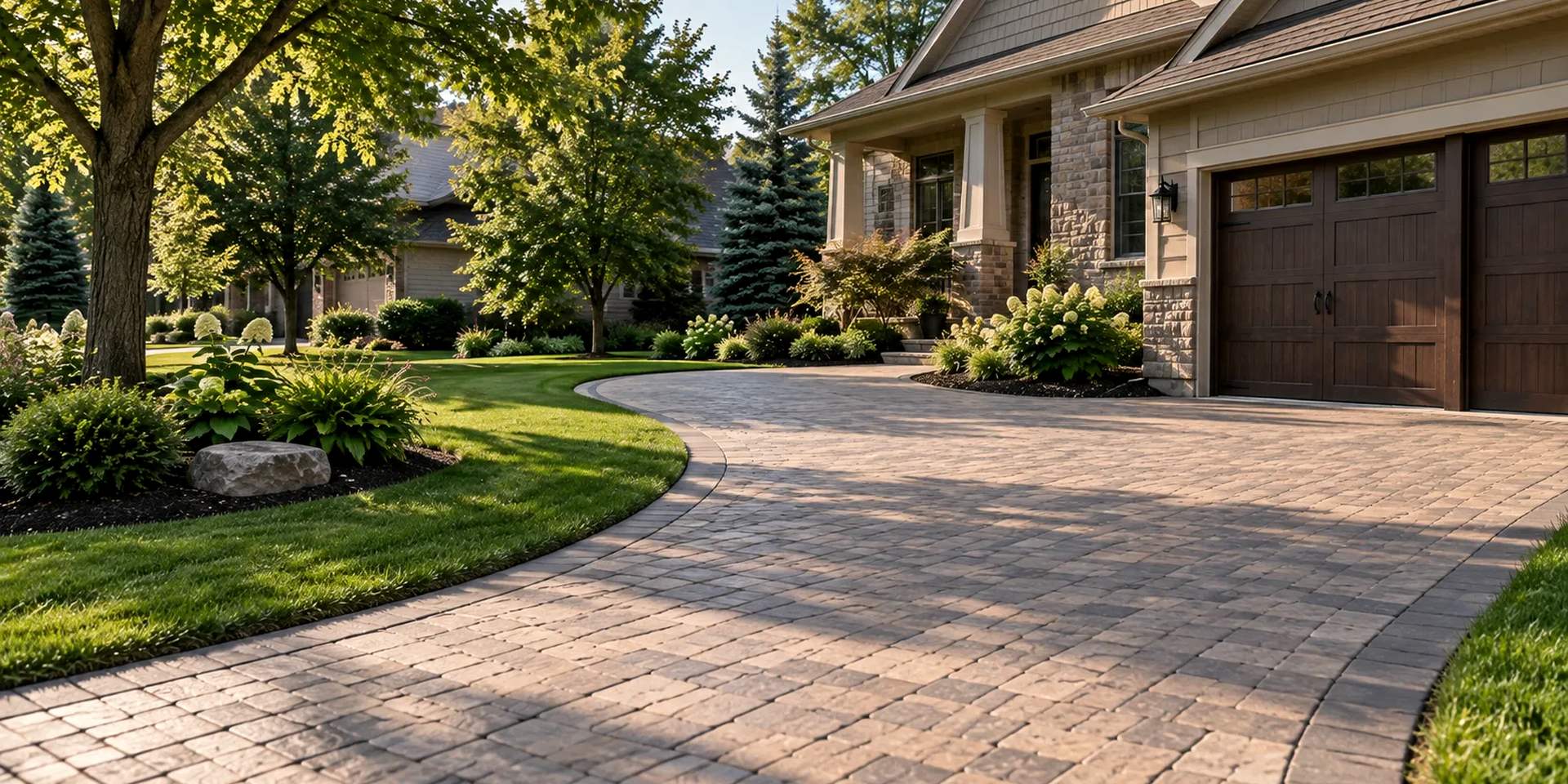
Your driveway is the largest surface at the front of your home and the first thing anyone sees. True North designs and builds paver driveways that carry daily traffic, send water away from the house, and work with the walkway, entry, and plantings to give the whole front of the property a finished, welcoming look.
More Than a Place to Park
A new driveway is the rare project that changes the look of the entire house. Done on its own, it's an upgrade. Designed together with everything around it, it becomes a complete front-of-property transformation.

What a complete front-of-property project can include
- The driveway itself, sized and shaped for how you park, turn around, and host guests.
- A front walkway and entry that connects the driveway to the door with the same materials and care. Explore paver patios and walkways.
- Steps and landings that make the approach to the house comfortable and safe.
- Retaining walls where the driveway cuts into a slope. Explore retaining wall construction.
- Lighting and plantings that frame the entry and make arrivals easy after dark. See how they fit into landscape design and installation.
Built to Carry Real Weight
A driveway follows the same principles as a well-built patio, with one big difference: it carries vehicles every day. That changes almost every part of the build.
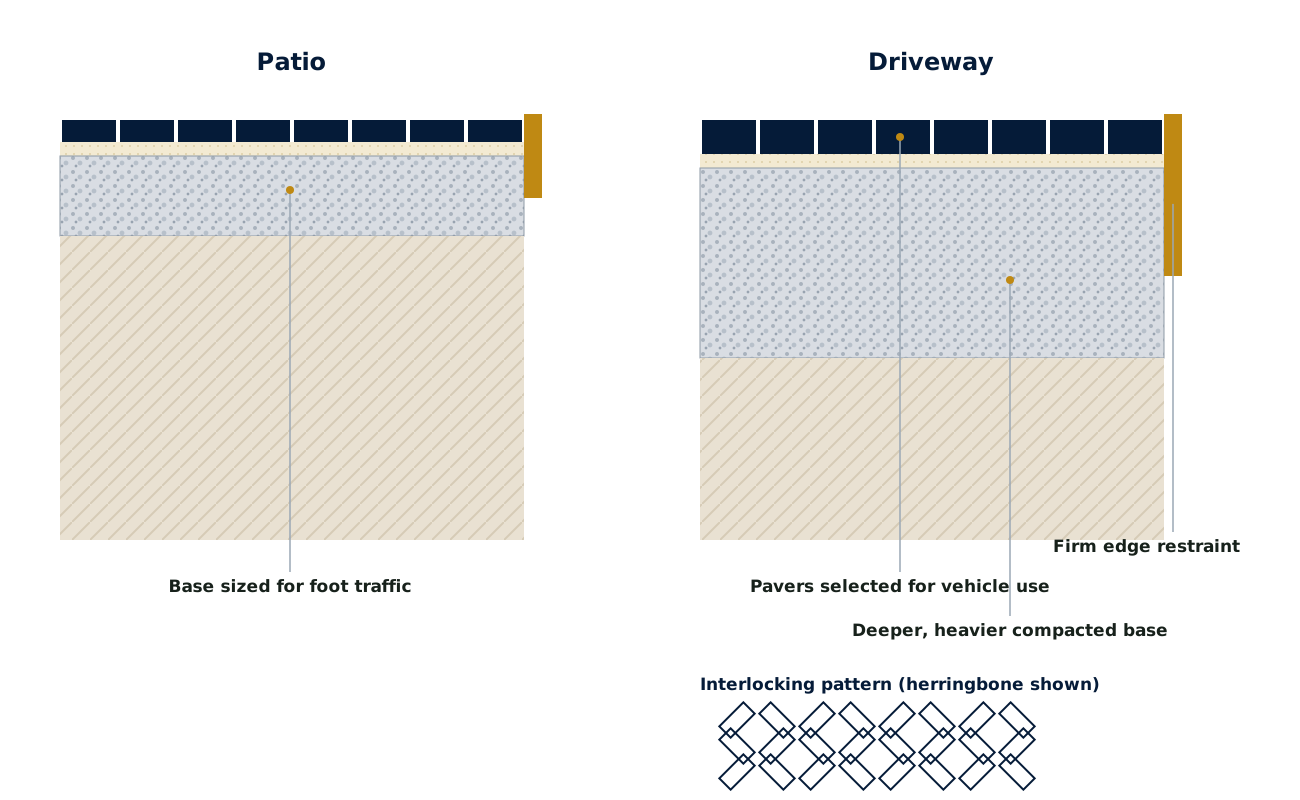
- A deeper, heavier base. More excavation and more compacted aggregate spread the weight of cars and trucks and resist rutting and frost movement.
- Pavers suited to vehicle traffic, selected for driveway use rather than foot traffic alone.
- Interlocking patterns, such as herringbone, that hold up to turning tires better than patterns designed for foot traffic.
- Firm edges. Strong edge restraint along the sides and at the apron keeps the field from spreading where tires run near the edge.
None of that shows once the driveway is finished. All of it decides whether the surface stays smooth and level for years or starts to dip and shift.
Drainage Planned From the Start
A driveway sheds a large volume of water, and where that water goes matters. The surface is graded to carry runoff away from the house and garage and toward an appropriate outlet. Where grades run toward the garage, a drain across the apron may be needed to intercept water before it reaches the door.
On some properties, permeable pavers may be worth considering. They allow water to pass through the surface into a base designed to hold and release it, though suitability depends on the soil, the site, and local rules. Many Monmouth County towns limit how much of a lot can be covered by hard surfaces, and how permeable systems are treated under those rules varies, so it's worth checking early. For property-wide water problems, see our drainage and grading solutions.
Design Choices That Shape the Look
Pavers, colors, and patterns
Paver driveways can be classic or contemporary, from tumbled, aged-looking units in warm blends to clean, modern shapes in cool grays. Color and pattern should complement the roof, siding, and trim, and the scale of the pattern should suit the size of the house.
Borders and accents
A contrasting border defines the driveway's edges and frames it like a finished feature. Accent bands, a distinctive apron at the street, or a change in pattern at the walkway connection add detail without feeling busy.
Layout and function
Curves, widened parking areas, turnarounds, and guest parking can make a driveway work far better than the one it replaces. On larger lots with long approaches, the layout also shapes how the house is revealed as you arrive.

Replacing an Asphalt or Concrete Driveway
Many paver driveways start as a tired asphalt or cracked concrete driveway. Replacing it is the right moment to fix what never worked: correct the grading, solve drainage at the garage, rethink the layout, and connect the driveway to a new front walkway. The old surface comes out, the base is rebuilt properly, and the new driveway goes in as part of a plan for the whole front of the property.
Driveways for Monmouth County Homes
Driveways here range from long, winding approaches on larger lots in Colts Neck and Holmdel to tight in-town drives where the driveway, walkway, and front yard share every foot of space. Each one has to stand up to New Jersey winters, with freeze-and-thaw cycles, plowing, and de-icing. A well-built paver driveway handles all of that, and the layout and materials are planned with winter in mind. We build paver driveways throughout our Monmouth County service area.

How a Driveway Project Comes Together
- Site visit. We look at the existing driveway, grades, drainage, access, and how you use the space day to day.
- Layout and design. We define the size, shape, pavers, pattern, borders, and drainage, along with any walkway, steps, or landscaping that's part of the project.
- Project estimate. Once the scope is defined, we prepare an estimate for the work.
- Removal and excavation. The old surface is removed and the area is excavated and graded.
- Base, installation, and walkthrough. The base is built and compacted, the pavers and edges are installed, and we walk the finished driveway with you.
Paver Driveway FAQs
How does a paver driveway compare with asphalt?
Pavers cost more up front, but they offer far more design choice, don't need the periodic resealing asphalt does, and can be repaired by lifting and resetting individual pavers instead of patching. Built on a proper base, a paver driveway is a long-term upgrade to the home.
Can a paver driveway be plowed and de-iced?
Yes. A plow blade with a rubber or poly edge, or one set slightly above the surface, helps avoid scraping. Use de-icing products labeled safe for concrete pavers, and avoid metal shovels or ice choppers on the surface.
Do I need a permit for a new driveway?
Often. Many towns require a permit for driveway work, especially when it involves the curb cut, the apron at the street, or widening the driveway, and lot coverage limits may apply. Requirements vary, so they're identified early in planning.
Can a heated driveway be installed under pavers?
Snowmelt systems can be installed beneath pavers on some projects. Whether one is practical depends on the site, the budget, and the available power or heating source, and it has to be planned before construction begins. If it interests you, raise it early in the design.
Images on this page are AI-generated illustrations of design ideas. They are not photographs of completed True North projects.
Reviews
Proof From Local Homeowners
Reviews help homeowners understand what it’s like to trust True North with a full design-build project.
Ready to transform the front of your home?
Let's Build a Driveway That Makes an Entrance
Tell us about your driveway and your plans for the front of the property, and we'll help you plan a project that looks right and lasts.